 NDLink
Drug abuse among young people remains a growing risk in the Niger Delta, with profound implications for individual well-being, social stability, and communal peace. Often cited as one of the key drivers of violence and criminality amongst communities, this issue is further exacerbated in school environments by limited awareness, weak institutional engagement, and the powerful influence of peer pressure. These factors create a vacuum where risky behaviors easily take root.
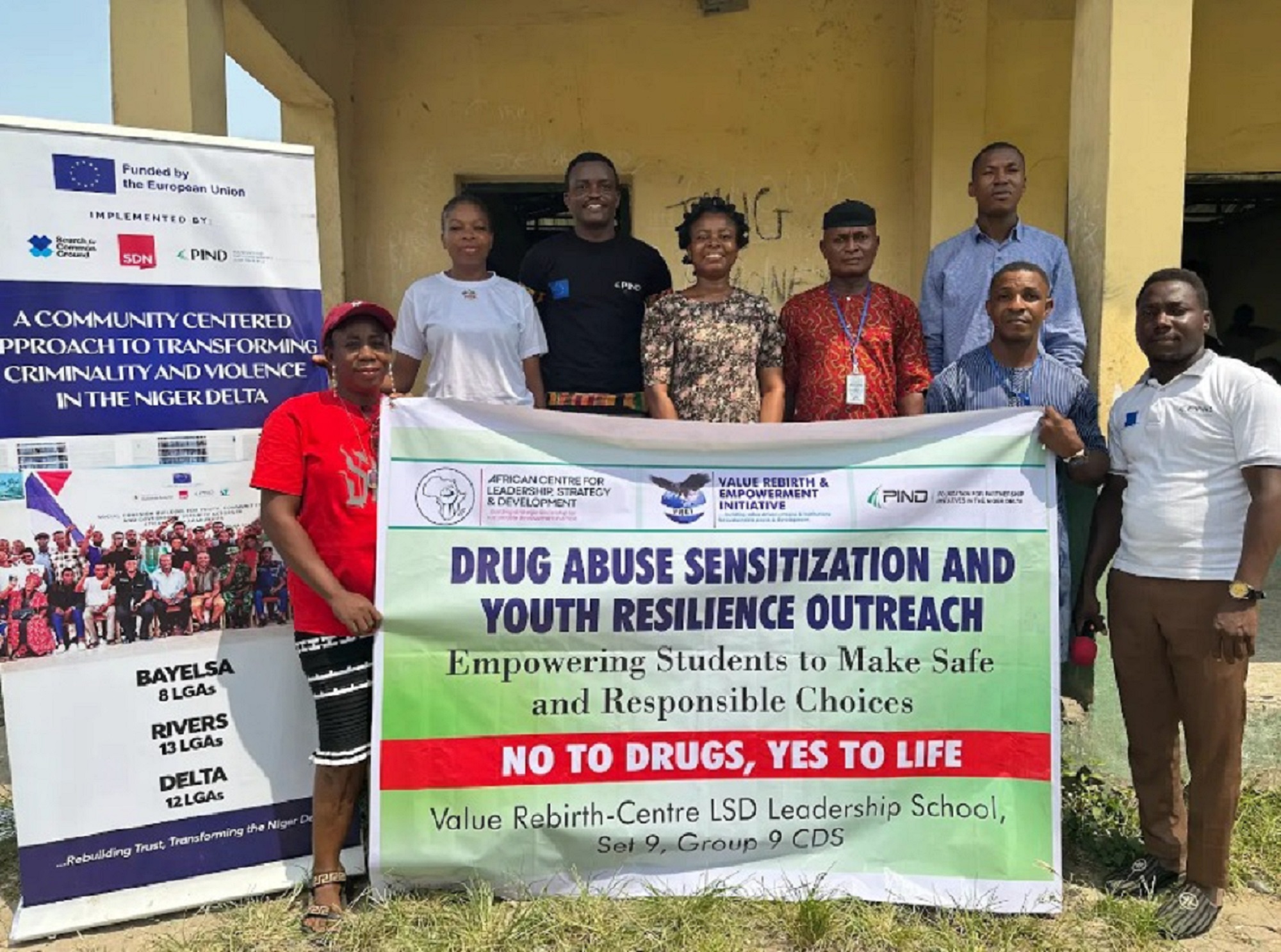
In collaboration with members of Group 9 (Value Rebirth – Centre LSD Leadership School), PIND, under its EU-funded project “A Community-Centered Approach to Transforming Criminality and Violence in the Niger Delta,” implemented with consortium partners, conducted a Drug Abuse Sensitization and Youth Resilience Outreach at Ovwian Secondary School in Udu Local Government Area, Delta State.
Held on March 13, 2026, as part of its sustainability initiative to ensure commutes take ownership of their own peacebuilding efforts even when the projects end, the outreach engaged approximately 100 senior secondary students (SS2–SS3), equipping them with practical knowledge on drug abuse, strengthening their decision-making skills, and reinforcing their role in promoting safer communities.
Tackling Drug Abuse Through Preventive Engagement
The sensitization outreach was designed as a preventive intervention, focusing on increasing awareness of drug abuse and its consequences while highlighting the link between substance use, behavior, and community peace.
Participants explored key drivers of risky behavior, particularly peer pressure and curiosity, and were encouraged to reflect on personal responsibility. By introducing peacebuilding narratives within a school setting, the session positioned students as active contributors to community stability, aligning with PIND’s broader strategy of addressing early key drivers of violence before it escalates.
Encouraging Reflection and Responsible Choices
Guided by a team of peacebuilding experts, the outreach adopted an adaptive, student-led approach that prioritized high engagement through various participatory methods. The session began with interactive discussions and guided questioning designed to spark critical thinking, which transitioned into real-life storytelling to illustrate the tangible consequences of drug abuse.
To further maintain energy and focus among students, the facilitators integrated icebreakers and energizers, along with deep reflection exercises, in which students analyzed the complexities of peer influence and the importance of making independent, responsible life decisions.
Key Outcomes: Advancing Youth Resilience
The outreach successfully achieved the following milestones:
- Enhanced Awareness: Participants gained a comprehensive understanding of how substance abuse impacts health, behavior, and future opportunities.
- Behavioral Reflection: Students identified peer pressure as a primary risk factor and shared perspectives on how to resist negative influences.
- Informed Decision-Making: Many demonstrated greater capacity to make independent, responsible decisions in high-pressure situations.
- Peace & Stability Linkages: Students recognized the direct connection between individual behavior and community stability, understanding how drug abuse fuels local insecurity.
- Active Engagement: High levels of participation validated the effectiveness of the interactive, expert-led approach.
Looking Ahead
While the outreach was a one-off, it offers opportunities for deeper engagement. Future efforts can focus on identifying student champions, strengthening school-community linkages, and replicating similar interventions across other communities.
Through this initiative, PIND continues to demonstrate that early engagement with young people is critical to preventing negative behavioral pathways and building more peaceful, resilient communities in the Niger Delta.